
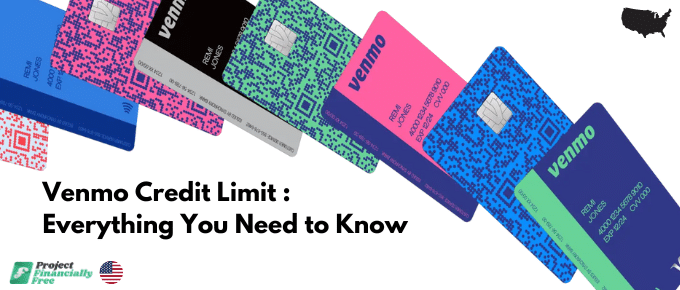
Venmo is an increasingly popular digital wallet service that first started up in 2009. Since that time, it’s gone head to head with other ease-of-spending apps – and was even purchased by PayPal, a main rival, in 2013.
However, many people use Venmo for more than just making payments. Users across the US also use Venmo to apply for and use credit when they need to purchase high-value items or budget ahead.
That means thousands of us are not just using Venmo as an app, but have our own physical credit cards, too. As you might expect, if Venmo offers credit, they will also impose credit limits.
In this guide, I’ll take you through what to expect from your Venmo credit limit, why it’s there, and how you can (potentially) increase it. A word of warning – you’ll need to commit to healthy spending habits for a while!
What is the minimum Venmo credit limit?
Venmo offers an opening credit limit of $250 to all applicants. However, the amount you actually receive once you’ve applied for your card may vary upward from there.
As with most other credit card services, there’s a limit to how much you’re allowed to run up in charges at any one time. This is a measure that, while seemingly restrictive, actually protects you from running up charges beyond your control.
Credit card issuers like Venmo have taken on a more responsible stance over the years when it comes to lending and limits. The credit limit Venmo applies, therefore, will accurately reflect how much of a risk they see your account to be!
Credit limits are also highly useful if you’re new to borrowing money and are unsure how to manage it. That said, they shouldn’t ever be seen as goals – which is perhaps why Venmo sets their opening limits relatively low for newcomers until more details are processed.
What affects the credit limit I can get through Venmo?
Venmo decides upon the credit limit you’re entitled to once you complete your application. While you’re guaranteed at least $250 in limit to fall back on if you need it, you could stand to receive a higher amount if you fulfill certain criteria.
Here’s a quick snapshot of what Venmo is likely base your credit limit on:
Credit history
Virtually all credit card lenders based initial limits on credit scoring, and Venmo is no exception. Credit histories tell lenders how much money you’ve borrowed in the past, and how reliable you’ve been at paying it back on time and in full.
As such, if you have a poor credit history, it’s unlikely you’ll receive more than the standard $250 Venmo credit limit. In fact, if you have a history of paying late or not at all, Venmo may even reserve the right to refuse your application at all.
When you’re refused credit, your credit score takes a further hit. That means you’ll need to improve your credit by paying off standing debts, or using services such as Chime to start rebuilding a credit history from scratch. Eventually, Venmo may accept your application and raise your limit above $250.
Income
While there’s nothing explicitly stated by Venmo online, it’s not unheard of for credit lenders to refuse to raise limits (and reject applications at all) based on borrower income.
Ultimately, Venmo wants reassurance that, even if you hit your credit limit, you’re in a secure and well-enough-paid role to keep their bills paid when they expect them.
If Venmo doesn’t think your salary is likely to meet the demands of a higher credit limit, they’ll keep you at a lower threshold.
However, this isn’t likely to be the be-all and end-all for applying for a Venmo card. If your credit history is healthy and you have a great record for paying debt back on time, you might be surprised by the credit limit you receive (and in a good way).
Credit reliance
Much of the detail regarding your dependence on credit will be obvious through credit checks Venmo undertakes on your history. However, over time, Venmo may restrict or alter your credit limit if you seem to rely too heavily on their money.
Credit cards aren’t always the best options for long-term spending or reliance. In many ways, a Venmo credit card is probably best suited for smaller purchases, vacations, or one-off payments that you can’t afford right away, but want to split.
Venmo is a responsible lender, which means it’s unlikely they will give you the best limit rates if you prove to rarely get your head above water.
Can I call to increase my Venmo credit limit?
Yes – Venmo has a specific credit increase line you can call at 855-878-6462. This number puts you through to Synchrony Bank, who supports Venmo’s credit card service.
However, always think carefully about calling to increase your credit limit. Unless you have a good history of paying your Venmo bills online and in full, you may not be approved for an increase.
What’s more, Venmo also reserves the right to lower your limit if they feel you are not borrowing responsibly.
In the event of you receiving no change to your credit limit, or you receiving a lower threshold, Synchrony Bank will write to you either via mail or email within two weeks of your request.
Remember not to take credit limit increase requests lightly. If you’re rejected, your credit score may be adversely affected. That means you may struggle to borrow money from other lenders or increase your credit limit with Venmo in future.
What happens if I breach my Venmo credit limit?
Breaching a credit limit with any provider will likely result in your credit score receiving damage. It may also result in fees. However, you’ll need to look through your specific agreement with Venmo for the full details.
It’s wise to try and manage a credit limit that’s manageable based on your income and your expenditure. If you are struggling to keep up to credit card payments and are worried about reaching your limit with Venmo, consider reaching out to debt relief companies such as New Era and Pacific Debt Relief.
It’s never a good idea to try and breach your credit limit to “see what happens.” The answer will be that you’ll damage your relationship with Venmo and further damage your credit profile for any kind of borrowing in future.
Is there a limit to how many Venmo credit cards I can hold?
Venmo will let you retain up to four cards, active or deleted, at any point within a rolling six-month period.
That means even if you choose to delete or remove a card at any point during this period, it will still count towards your four-card total.
Venmo is unable to boost this limit and advises that if you feel you see this message appear on your account in error, it’s likely the six-month rolling restrictions coming into play.
Personally, I’d advise against holding more than one Venmo credit card at any one time. If you’re struggling to manage debt to the extent you’re applying for additional credit to keep above water, it may be wise to reach out to a debt relief specialist (such as those listed above).
What are Venmo Personal Profile Payment limits?
Venmo Personal Profile Payment limits are a little different to credit limits in that they apply to your activity in the Venmo app itself. Many people find the two confusing when starting out, so don’t worry if you’re scratching your head over the different limit types!
Venmo applies a Personal Profile Payment limit that resets each week. When you first sign up with Venmo, and before you verify your identity, you can send a maximum of $299.99.
Keep in mind, too, that this limit applies to both personal transfers and those you make to merchants via Venmo. It’s only possible to raise this limit by verifying your identity.
Once your identity is verified, you’ll receive the full weekly transfer cap of $60,000, and a cap of $7,000 per week on store, checkout, and other merchant app payments.
You can verify your ID through the Venmo app itself – just make sure you have a valid drivers’ license and/or passport to hand, as well as a proof of US address.
Are there Venmo debit card limits?
If you run a debit card through Venmo (partnered with MasterCard), there are a handful of further limits you’ll need to keep in mind.
For example, you’ll only be able to spend up to $2,999.99 per individual purchase. You have a 24-hour purchase limit of $3,000, a weekly limit of $7,000, and cash back / withdrawal limit (impacting ATM and counter requests) of $400 per day.
Don’t forget, there’s also a 30-transaction limit per day, and there’s reload limits you can monitor directly in the Venmo app.
Venmo applies these limits to ensure that you can keep a close eye on your spending. While they may seem restrictive at times, it’s worth remembering that without limits, you risk spending beyond your means.
These restrictions can help you to build better borrowing and spending habits over time!
Can I get a Venmo credit card and Venmo credit limit outside the US?
At the time of publication, you’ll only be able to claim credit within US states and US territories. Therefore, you won’t be able to set up a credit account through a European territory, for example.
You can use your Venmo credit card (supported by Visa) anywhere you travel abroad, provided Visa already supports the territory you visit.
This doesn’t apply, however, to Venmo debit cards. MasterCard’s policy with Venmo remains that you can only use funds from your debit card with US states and territories at this time.
In any case, it’s not always a good idea to set up international credit accounts if you already have debt in your home country. My advice is to focus on one territory at a time – and, as always, to pay down your debts first!
Personally, I think credit limits are a good thing. They help us to keep track of money we spend that’s not necessarily ours, and while many of us have healthy relationships with credit, it’s still worthwhile having a safety net.
Venmo seems to be one of the more reliable and responsible credit lenders operating in the US right now. However, that doesn’t mean there’s no fine print for you to read. Before signing up for any cards or limits, always read contract terms from beginning to end (and without fail!).
Did You Know?
You can use Venmo to also easily and instantly transfer money to someone without needing a routing number or account number. This feature is what makes Venmo amongst one of the top money transfer apps in the US. Do read our linked article for further information.

by Jon Craig
I am the creator of Project Financially Free and I started this journey to both educate myself and share my insights on personal finance. I’m passionate about financial literacy and I invite you to join me on this transformative path. See more.
Leave a Reply